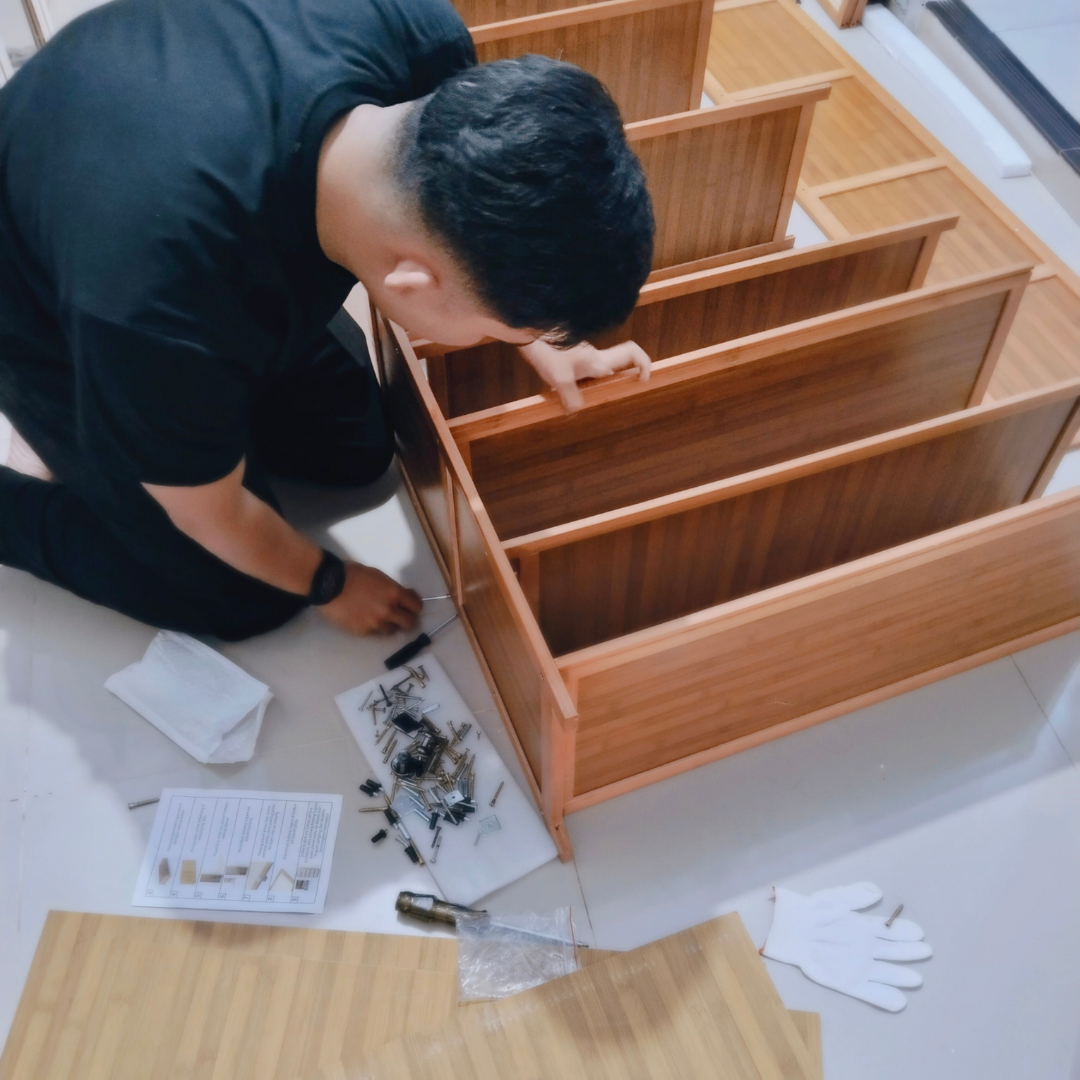
You bought the bed. You assembled the bed. You may have even questioned a few life choices while assembling the bed.
And now you’re moving.
Does that mean you have to take the whole thing apart again? Or will your movers handle it?
It’s one of those questions people don’t always think to ask until moving day is getting uncomfortably close. And the answer is a little more complicated than yes or no.
Welcome to another edition of Ask the Movers, where we tackle the questions that come up when you’re preparing for a move.
Will Movers Disassemble and Reassemble Furniture?
Many professional moving companies offer basic furniture disassembly and reassembly, but what’s included depends on the company, the furniture, and the complexity of the job.
That may not be the quick answer you were hoping for, but there is some nuance that we need to run through.
A standard metal bed frame is a very different project from a king-size storage bed with built-in drawers, a bookcase headboard, and approximately 400 pieces of hardware. Both are beds, but taking them apart is an entirely different experience.
The important thing is to ask about specific pieces before moving day.
If you have a king-size bed, a large sectional, or a dining table that needs to come apart to fit through a doorway, mention it when you’re getting your moving estimate.
That gives your moving company an opportunity to determine what equipment, time, and preparation may be needed.
And it helps prevent the awkward moment when everyone is standing in the bedroom staring at a bed frame that won’t fit down the stairs.
What Furniture Typically Needs to Be Taken Apart?
Not everything needs to be disassembled for a move. In fact, taking apart furniture unnecessarily can create more work and increase the chances of losing hardware or damaging components.
But some pieces are easier and safer to transport when partially disassembled.
Beds: Large bed frames, headboards, footboards, and adjustable bed bases may need special attention. Some can be separated into manageable pieces, while others have electrical or mechanical components that require additional care.
Dining tables: Removing the legs from a large table may make it easier to maneuver through doorways and protect the table during transportation.
Sectional sofas: Many sectionals are designed to separate into individual sections. The trick is knowing how they’re connected before someone starts pulling.
Desks and office furniture: Large desks, modular workstations, and furniture with detachable components may need partial disassembly, particularly when moving through narrow spaces.
Here’s the part people often overlook: Just because furniture can be taken apart doesn’t mean it should be.
What About IKEA Furniture?
Ah, IKEA. Where a perfectly ordinary bookshelf can arrive in 47 pieces with instructions that somehow contain no words.
Ready-to-assemble furniture deserves its own conversation because it isn’t always designed to be disassembled and rebuilt repeatedly.
Removing screws from particleboard can weaken the connections. Cam locks and other fasteners may loosen or become damaged. And a piece that felt perfectly sturdy in your living room might not survive another round of assembly quite as gracefully.
That doesn’t mean you can’t move IKEA furniture. It means you should be realistic about its construction and condition.
For some pieces, moving them intact may be preferable if the size, weight, and access allow it. For others, partial disassembly may be necessary.
And occasionally, a piece simply isn’t a good candidate for moving.
Before your move, let your moving company know about any large ready-to-assemble furniture so you can discuss the safest approach.
What About Exercise Equipment, Murphy Beds, and Other Complicated Pieces?
This is where you really don’t want to make assumptions.
Treadmills, home gyms, adjustable beds, Murphy beds, and large entertainment systems can involve electrical components, specialized hardware, wall attachments, or manufacturer-specific assembly procedures.
Some may require a qualified technician or installer rather than a standard moving crew.
For example, a wall-mounted Murphy bed isn’t simply a bed frame with a few extra screws. Its mounting and lifting mechanisms can present serious safety risks if handled incorrectly.
The same goes for certain exercise machines and adjustable furniture with motors or electronic controls.
If you own anything that required professional installation, specialized tools, or a particularly memorable assembly experience, bring it up during your moving consultation.
Moving day is not the ideal time to discover that your treadmill requires a technician and a 40-page instruction manual.
The One Thing You Should Never Do With Furniture Hardware
Throw all the screws, bolts, washers, and mysterious little metal pieces into one giant bag.
It sounds efficient until you’re standing in your new bedroom trying to determine which of 26 nearly identical bolts belongs to your bed.
If you’re disassembling furniture yourself, keep the hardware for each piece together in a labeled, sealed bag. Photograph the connections before taking anything apart, especially if the assembly isn’t obvious.
You can also label individual components so you know which side is left, right, front, or back.
Keep any manufacturer instructions or assembly manuals accessible. Digital copies can be particularly helpful if the original paperwork disappeared years ago.
And don’t assume that every screw is interchangeable just because it looks close enough.
Your future self, the one who wants to sleep in an actual bed instead of on a mattress on the floor, will appreciate the effort.
Will Furniture Disassembly Affect the Cost of My Move?
It can.
Disassembling and reassembling furniture takes time, and some items require additional labor or specialized services.
How that affects your estimate depends on the moving company’s pricing structure and what’s included in the quoted services.
That’s why it’s important to be specific when describing your furniture.
Instead of saying, “We have three bedrooms,” mention the king-size platform bed with built-in storage, the oversized dining table, and the home gym in the basement.
Those details help a moving company understand the actual scope of your move.
And if you’re comparing moving estimates, make sure you understand whether furniture disassembly and reassembly are included or quoted separately.
The cheapest estimate isn’t necessarily the cheapest move if you’re comparing different levels of service.
A Little Preparation Can Save a Lot of Trouble
You don’t need to become a furniture assembly expert before moving day.
You do need to know which pieces might require extra attention and make sure your movers know about them.
Take a quick inventory of large furniture, particularly anything that was assembled inside the room where it currently lives. Measure tight doorways and stairways if you’re concerned about access. And mention specialty items before the moving crew arrives.
At TrueMover, we help homeowners and businesses throughout Northern Virginia plan moves of all sizes, from apartments and townhomes to larger homes and offices.
Have a question about moving a particular piece of furniture? Tell us what you’re moving when you request your quote. We’ll help you understand the options and what needs to be addressed before moving day.
Because nobody wants to finish a long day of moving only to discover the bed is still in pieces.