You’ve spent weeks figuring out how to get out of your old house.
Boxes? Packed.
Closets? Emptied.
Address? Changed.
That one cabinet nobody wanted to deal with? Eventually conquered.
But there’s another side of moving that’s surprisingly easy to overlook:
Is the new house actually ready for you?
A little preparation before the moving truck arrives can make unloading faster, protect your new home, and save you from discovering at 9 p.m. that there’s no electricity—or toilet paper.
Before moving day arrives, here are 10 things worth taking care of at your new home.
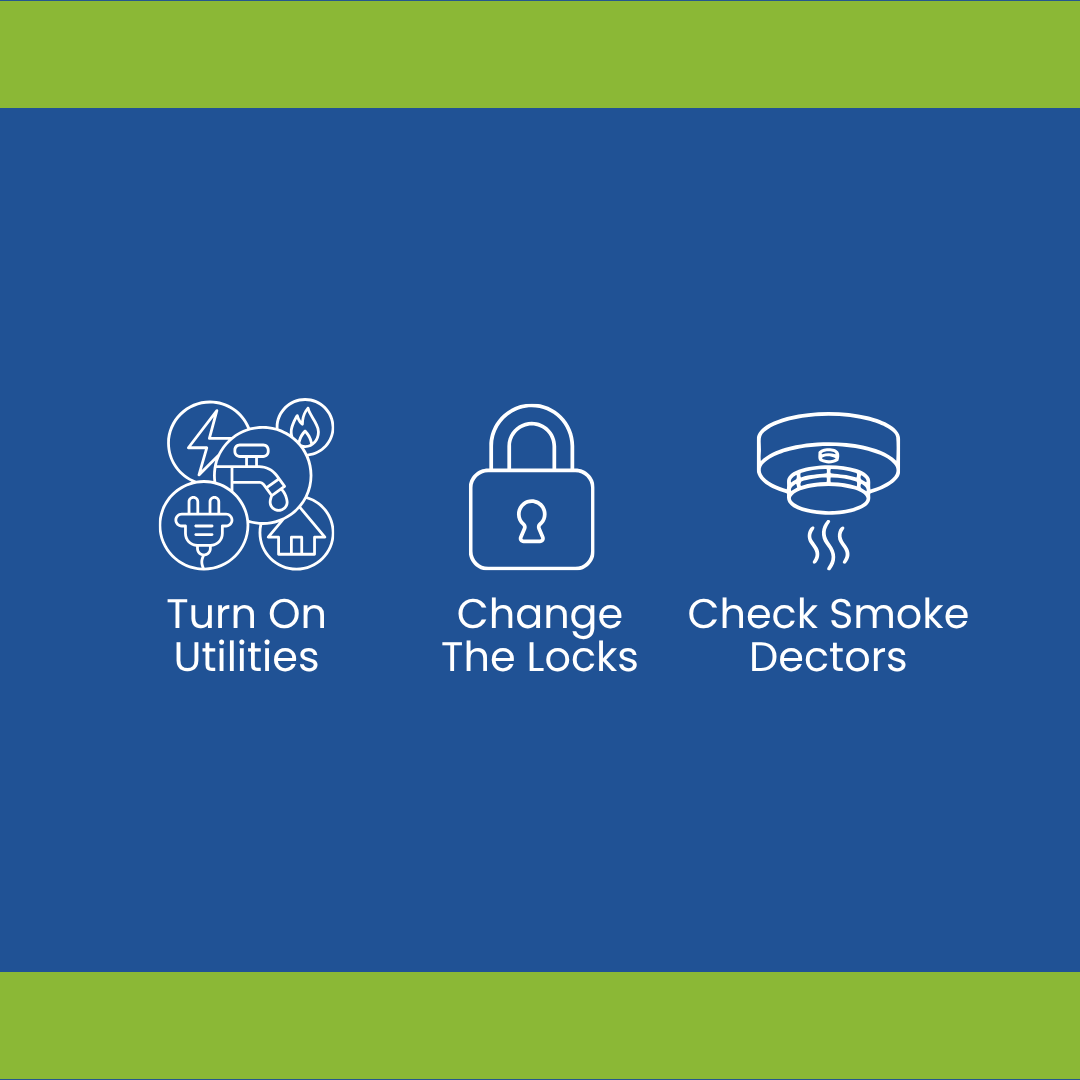
1. Make Sure the Utilities Are On
Let’s start with the big one.
Electricity, water, gas (if applicable), and internet should all be scheduled ahead of time.
Ideally, have essential utilities activated before moving day rather than on moving day. That gives you time to discover and address any problems before you’re standing in a house full of boxes.
Because unpacking by flashlight sounds adventurous for about five minutes.
Then it’s just dark.
2. Clean While the House Is Empty
There may never be an easier time to clean your new house.
No couches to move around. No boxes stacked against the walls. No dining table sitting exactly where you need to mop.
If possible, schedule a deep clean before moving day. Pay particular attention to kitchens, bathrooms, closets, floors, and the inside of cabinets.
Your realtor, moving company or new neighbors will likely know if a reputable company they know in your new area.
Even if the previous owners left everything in good condition, starting with a freshly cleaned home feels pretty great.
3. Change the Locks
You received the keys at closing.
But do you know how many other copies exist?
Previous owners, relatives, neighbors, contractors, cleaners, pet sitters—there’s really no way to know.
Changing or rekeying exterior locks gives you control over exactly who has access to your new home.
While you’re at it, reset garage door codes, smart locks, gates, and security systems.
New house. New keys.
4. Measure the Important Spaces
Your couch fit perfectly in the old living room.
That doesn’t mean it’s making it through the new front door.
Before moving day, measure doorways, hallways, staircases, elevators, and any particularly tight turns.
Then measure large pieces of furniture.
If something needs to be disassembled to get inside, it’s much better to know before the crew is standing on the front porch with it.
Also think about where large furniture is going. Knowing that the sectional belongs downstairs before it’s carried upstairs is helpful information.
For everyone.
5. Have a Basic Furniture Plan
You don’t need an interior designer’s rendering of every room.
You just need a general idea.
Which bedroom belongs to whom?
Where does the dining table go?
Is the large bookcase going in the office or basement?
Knowing the answers before unloading starts keeps things moving and reduces the amount of furniture that has to be moved twice.
If you’re particular about placement, a quick sketch can help.
Stick figures are perfectly acceptable.
6. Figure Out Parking and Access
Where is the moving truck going to park?
For a single-family home with a large driveway, the answer may be obvious.
For townhomes, condos, apartments, and homes with limited street parking, it may not be.
Check for HOA or building restrictions, loading areas, elevator reservations, parking permits, gate codes, and designated move-in hours.
If your movers need special instructions to access the property, give them those details ahead of time.
The closer and easier the access, the more efficiently your crew can work.
7. Protect Anything That Needs Protecting
Did you just refinish the hardwood floors?
Install new carpet?
Paint the stairway?
Let your movers know.
Professional movers take precautions to protect homes during a move, but communicating anything you’re particularly concerned about helps the crew prepare appropriately.
It’s also worth walking through the home beforehand and noting any existing damage.
Take a few photos for your records, especially if you’re renting.
8. Check the Smoke and Carbon Monoxide Detectors
This has nothing to do with moving boxes and everything to do with making the house ready to live in.
Check that smoke detectors and carbon monoxide detectors are installed where needed and working properly.
Replace batteries if you’re unsure when they were last changed.
It’s a small task that’s very easy to forget once unpacking begins.
9. Pack a Few New-House Essentials Separately
Some things shouldn’t be buried in Box #47.
Have a small collection of essentials waiting at the new house or traveling with you:
- Toilet paper
- Paper towels
- Hand soap
- Basic cleaning supplies
- Trash bags
- Phone chargers
- Bottled water
- Snacks
- Basic tools
And perhaps most importantly:
Coffee.
Moving day has enough challenges. A caffeine emergency doesn’t need to be one of them.
10. Do One Walkthrough Before the Truck Arrives
Walk through the new house one last time before moving begins.
Open doors. Check rooms. Make sure pathways are clear.
Look for anything that could create a problem when people start carrying large furniture through the house.
Then take a minute to enjoy it.
Right now, it’s an empty house.
By the end of the day, it’ll start feeling like your home.
Before the First Box Comes Through the Door
Preparing your new house isn’t nearly as time-consuming as packing the old one, but a little work ahead of time can make a noticeable difference on moving day.
Get the utilities running. Make a basic plan. Clear the path. Handle the little things while the house is still empty.
Then when the moving truck arrives, you can focus on getting settled instead of solving problems.
At TrueMover, we help families throughout Northern Virginia navigate moving day from the first piece of furniture loaded to the last box placed in its new room.
Planning a move? Contact TrueMover for a free quote and let us help make your move into your new home a little easier.